 Radio Progress News first radio station in the Upper West Region

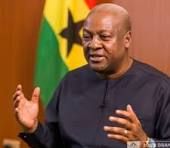
President John Dramani Mahama has assured the people of the Upper West Region that there will be a massive turnaround in the region’s road network by the end of 2027.
He said the government had adopted a phased approach to address the country’s infrastructure deficit, with major trunk roads being given priority before attention would be shifted to feeder roads linking communities to the main network.
President Mahama gave the assurance at a town hall meeting in Wa in the Upper West Region as part of his “Resetting Ghana” nationwide tour.
The government’s decision to prioritise roads followed widespread complaints about the state of the road network during the 2024 election campaign, the President said.
“Everybody was bitching.
There was not a chief whose palace I visited during the campaign that did not complain about the road,” he added.
President Mahama said the government’s “Big Push” infrastructure programme was conceived as a five-year programme that will invest $2 billion a year on infrastructure.
He said the programme touched on sectors such as agriculture, education, health, and tourism, but the government considered roads as the most urgent infrastructure need upon assuming office.
“Road networks are important for economic development because they help in the movement of people and goods around the country,” he said.
He cited the development of the US highway and railroad networks as an example of how transport infrastructure could act as a catalyst for national development.
President Mahama said the government had, therefore, decided to initially focus on major trunk roads such as the Hamile-Kumasi road and the Eastern Corridor.
The Eastern Corridor alone, he said, went through 26 districts, meaning that investment in the route would benefit a large number of communities and residents.
President Mahama, however, stated that the emphasis on trunk roads would not be at the expense of feeder roads.
“This is just phase one. We have phase two.
We will stabilise the trunk roads, then go to the feeder roads that go into the constituencies,” he said.
Some critical feeder roads, he said, were already being taken care of, while the government planned to address others under the next phase of the programme.
“I’m optimistic that most of the road projects underway will be completed by the end of 2027,” he said.
“I can assure you that by the end of 2027, a lot of the complaints that we hear about our roads will be lessened because people will be seeing the progress of work that has been done,” he said.
President Mahama said one of the major projects that had been delayed repeatedly under various governments was the Bolgatanga-Wa road.
He said the project had been handed to contractors by previous administrations, and work had either slowed or stopped when governments changed.
But he said his administration took a different approach by dividing the road project into several lots and awarding them to different contractors.
“I think there are maybe six contractors working on that road,” he said.
President Mahama said the strategy was to accelerate the construction by allowing a number of contractors to work on different sections of the route simultaneously.
The President also disclosed that the government had taken steps to address the delays on some sections of the road network in the region.
He said the Minister of Roads and Highways had recently cautioned three contractors over the slow pace of work during a recent inspection of portions of the road.
The contractors, he said, had been given notice that their contracts could be terminated or reduced in scope if they failed to improve their performance.
President Mahama said the approach was expected to speed up work on the roads and ensure that contractors who failed to deliver to expectations did not delay critical infrastructure projects.
The President also addressed concerns about the pace of work on the southern stretch of the road through Savelugu to Wa.
He said the contractor working on the Savelugu-Yipala section had made significant progress, but further work was needed beyond Yipala towards Wa.
“The government was talking to the contractor about speeding up work on the remaining part,” he said.
President Mahama added that the Upper West Region was receiving its fair share of the government’s infrastructure programme, and reiterated his commitment to improving road connectivity in the region.
“Better roads would not only improve transportation, but would also spur economic activity, as it would be easier for farmers, traders, and businesses to move goods and services across,” he said.
